

The Weekly Recap
News and Updates From Across BU Wheelock SPACE This Week
Welcome to this week’s recap! This week we provide details on faculty and SPACE engagement, highlight recently published research, and share information about upcoming events.
Out and About
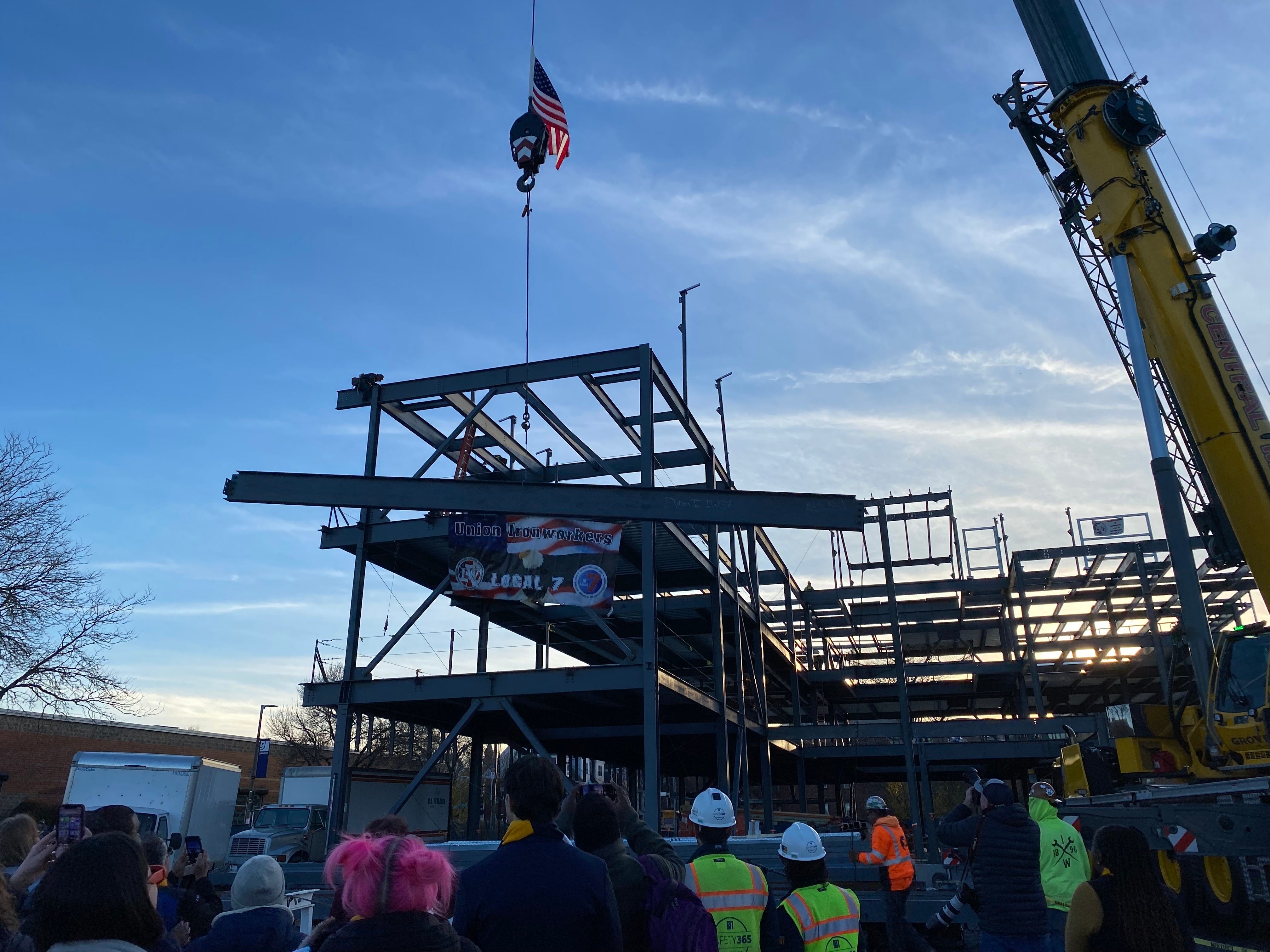
Mary Churchill (Assoc. Dean, SPACE) attended the topping-off ceremony for Franklin Cummings Institute of Technology’s (FC Tech) new campus in Nubian Square. Remarks were given by Turahn Dorsey, Chair of the Board of Trustees at FC Tech; Aisha Francis, President and CEO of FC Tech; and Tania Fernandes Anderson, Boston City Councilor, District 7.
Mary Churchill (Assoc. Dean, SPACE), Irene Dennison (Assoc. Director, SPACE), and Cara Mattaliano (Asst. Director, SPACE) attended The Boston Foundation’s event Pathways to Opportunity: A Conversation about High School-Based Pathways. Marinell Rousmaniere from EdVestors moderated a panel that included Ted Lombardi (Boston Public Schools), Loretta Minor (Roxbury Community College), Annie Duong-Turner (American Student Assistance), Alexis Lian (Rennie Center for Education Research & Policy), and Amanda Seider (OneGoal Massachusetts). Antoniya Marinova from The Boston Foundation gave closing remarks. We were excited to see so many colleagues in the room from the City of Boston, the Boston Private Industry Council (PIC), EdVestors, OneGoal MA, Jobs for the Future (JFF), and more.
Faculty Engagement
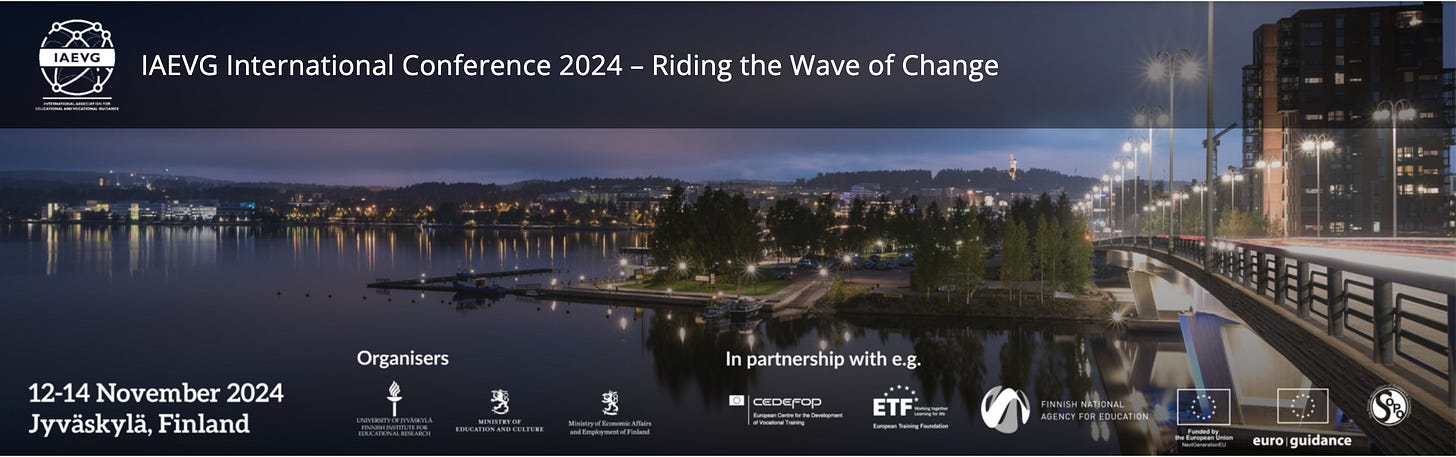
Scott Solberg (Professor, BU Wheelock), and members of his team from the BU Center for Future Readiness attended the International Association for Educational and Vocational Guidance (IAEVG) annual conference in Jyväskylä, Finland.
Team members from the National Center on Improving Literacy (NCIL) at BU Wheelock presented at the Virginia Council for Exceptional Children conference at James Madison University in Harrisonburg, VA. Their session, titled Intensify Your Instruction: A Concrete Approach to Complex Instruction, offered insights into NCIL’s Intensification Framework. Learn more about NCIL’s Intensification Framework here.
SPACE Engagement
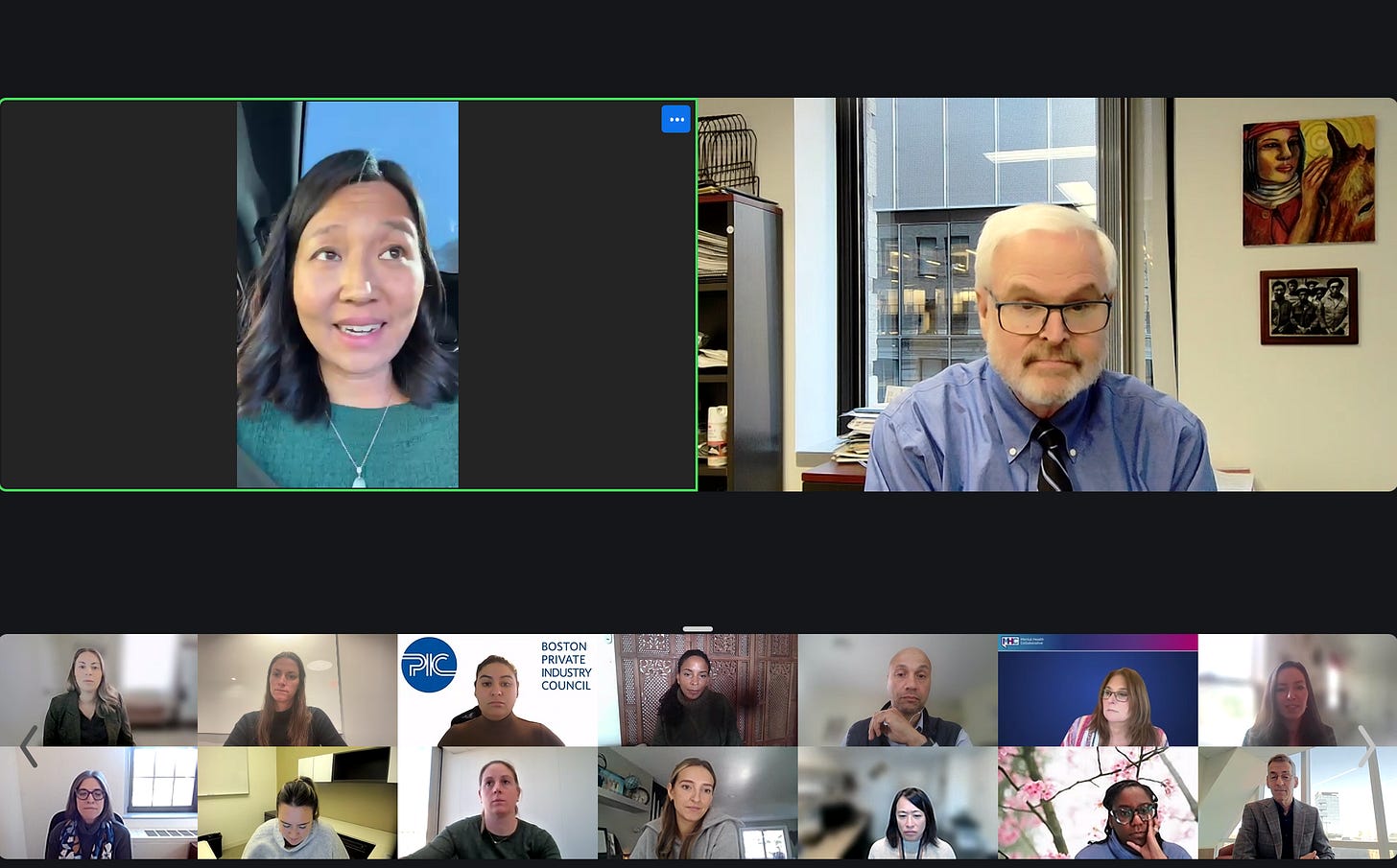
Mary Churchill (Assoc. Dean, SPACE) and Cara Mattaliano (Asst. Director, SPACE) presented at the Private Industry Council’s (PIC) Employer Network Meeting, sharing their interns’ summer book project as an example of “innovative practice” to employers across various sectors in Boston. BU Wheelock was honored with a shoutout from Mayor Wu and celebrated as one of the “Top PIC Employers”' for Summer 2024.
Research that Matters
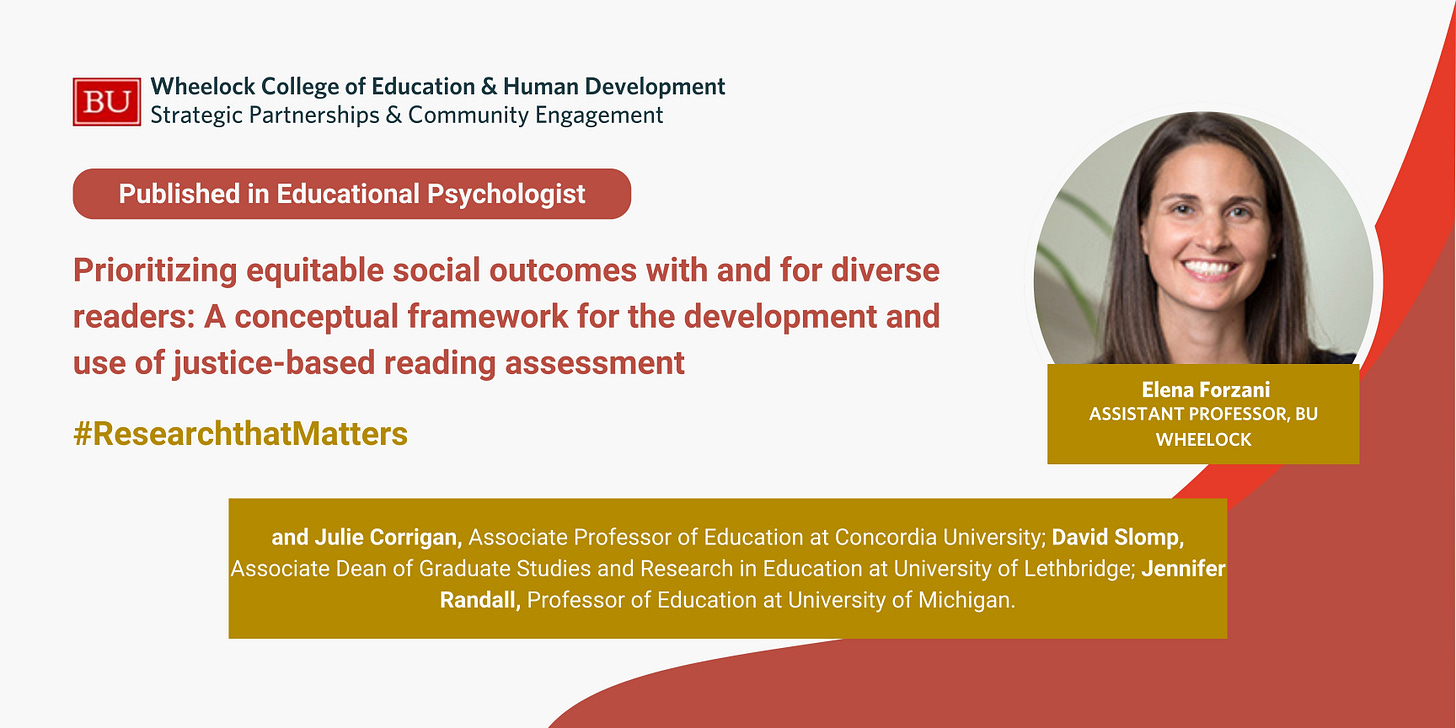
Justice-Based Reading Assessments: Prioritizing equitable social outcomes with and for diverse readers: A conceptual framework for the development and use of justice-based reading assessment (article co-authored by Asst. Professor Elena Forzani)
In this article, the authors posit that scholarship on the science of reading (SoR) has, in some instances, taken up more narrow views of reading in discussions of reading assessment that do not center equity and justice, especially in schools. The authors note that this can lead to less valid and even harmful reading assessments, especially for students from historically marginalized communities with diverse language, cultural, and neurological differences. They propose a justice-based reading assessment framework that can guide research, theory, policy, and practice and outline three interwoven components: (1) relational and humanizing assessment practices; (2) justice-based products and outcomes; and (3) a critical construct of reading.
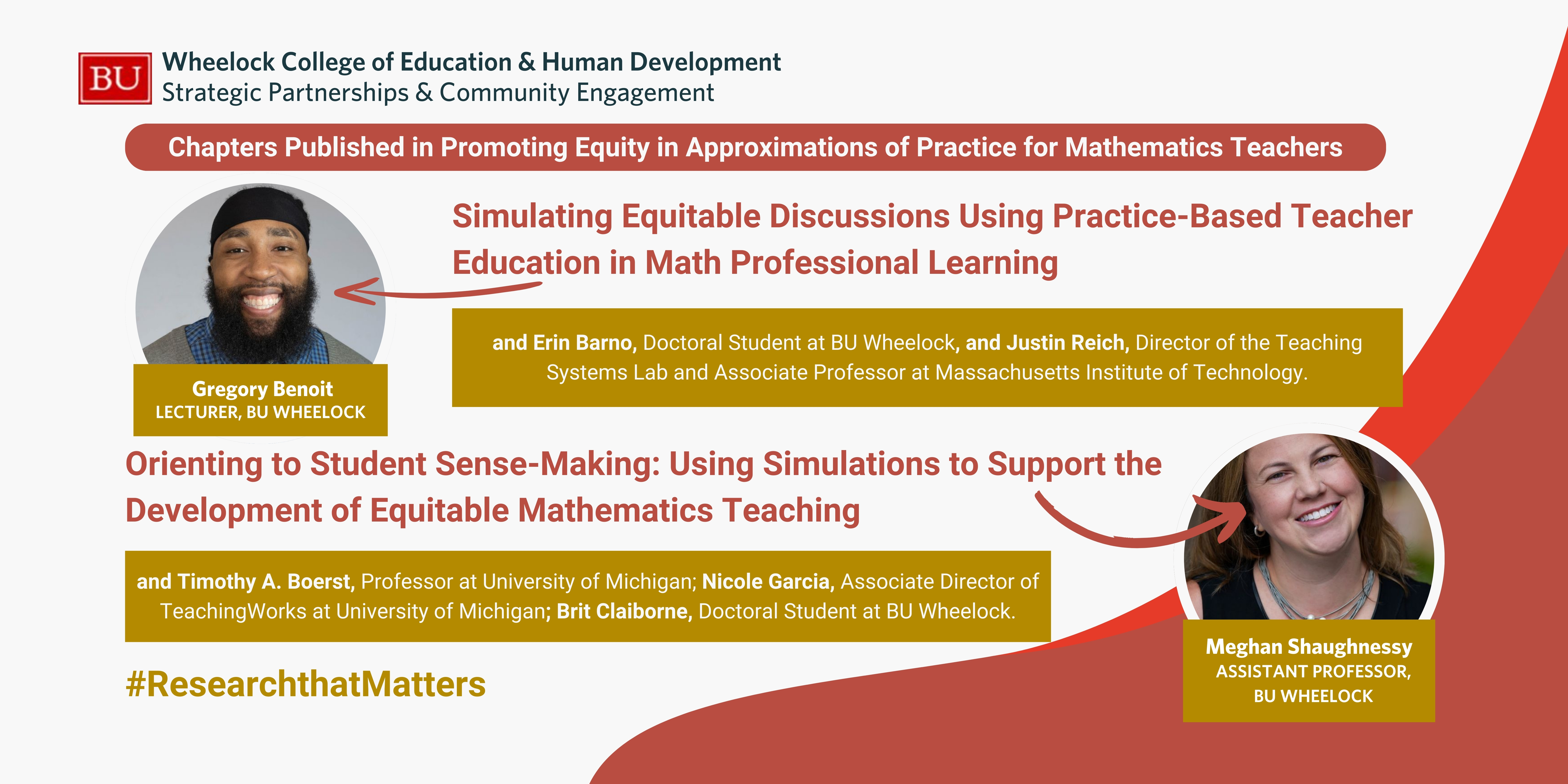
Positioning Students as Sense-Makers: Simulating Equitable Discussions Using Practice-Based Teacher Education in Math Professional Learning (chapter co-authored by Lecturer Greg Benoit)
How teachers position students sends powerful messages about who and what is valued in mathematics, ultimately influencing whether students see themselves as mathematical sense-makers. In this chapter, published in Promoting Equity in Approximations of Practice for Mathematics Teachers, the authors report on a professional learning intervention using digital clinical simulations to examine how mathematics teachers respond to students' algorithmic responses, (mis)conceptions, and alternative approaches. They found that teachers created space for all students to share their thinking and positioned them as sense-makers in small-group simulations. However, teachers made only minimal adjustments in their approach during simulated whole-class discussions.
Teaching Simulations: Orienting to Student Sense-Making: Using Simulations to Support the Development of Equitable Mathematics Teaching (chapter co-authored by Asst. Professor Meghan Shaughnessy)
This chapter reports on work from a decade-long project to develop and study the use of teaching simulations focused on the teaching practices of eliciting and interpreting student thinking to support preservice teachers' (PSTs) learning. The chapter describes how teaching simulations focused on these practices allow teacher educators to support PSTs in orienting to student sense-making that is at the heart of equitable mathematics instruction.
Reflections on Change to the Field: Editorial Insights: Reflections on the Volume and Charge to the Field (chapter co-authored by Lecturer Greg Benoit and Asst. Professor Meghan Shaughnessy)
In the final chapter of Section 3 of Promoting Equity in Approximations of Practice for Mathematics Teachers, the authors document an interview that took place in June of 2024, as the editorial team wrapped up reviews of the chapters submitted to the volume. This interview-based chapter was crafted to capture the authors' reflections and insights gained throughout the process of assembling the volume.
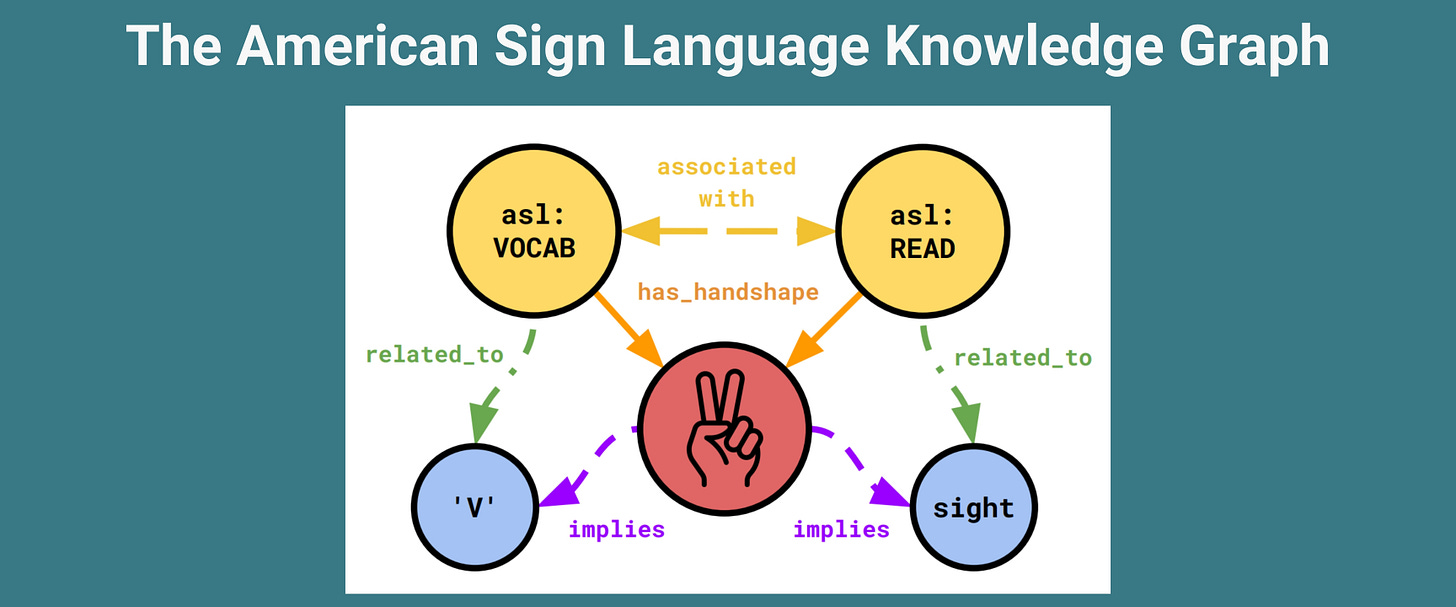
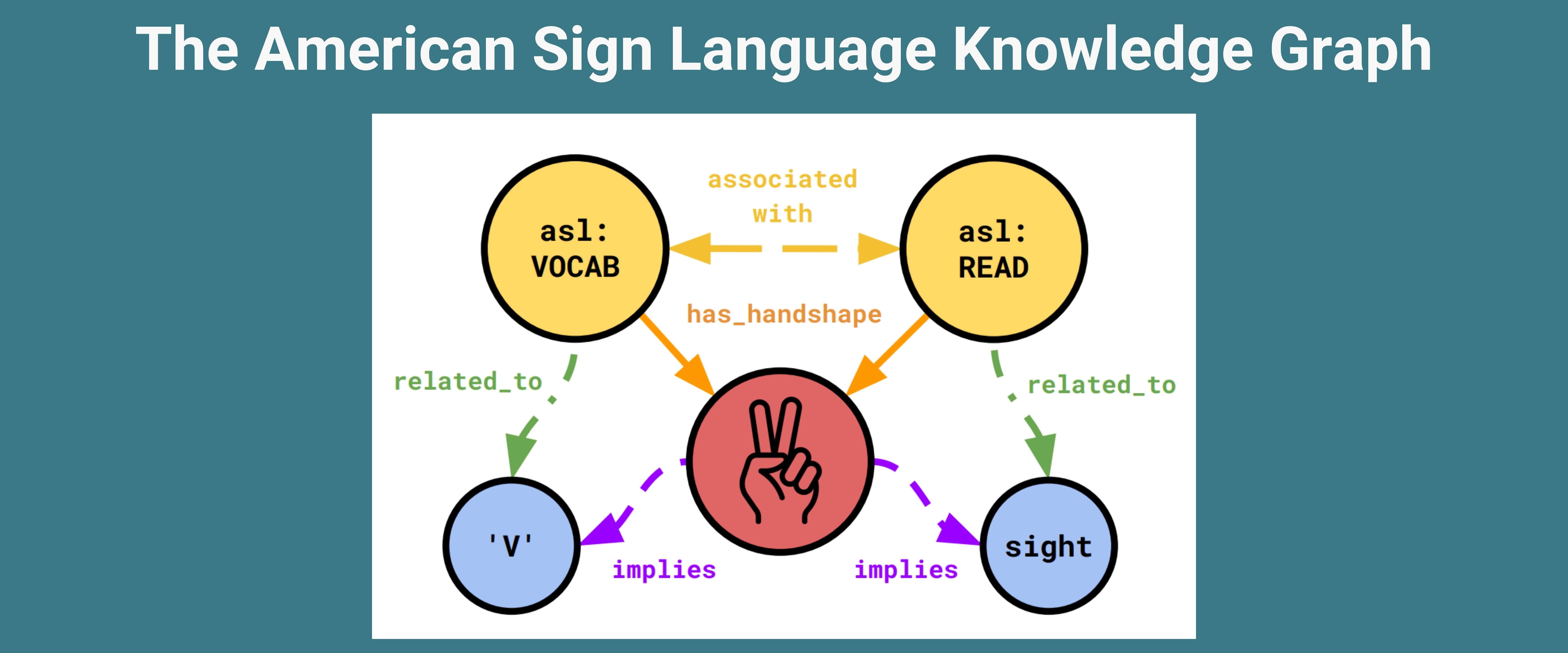
Advancing ASL Language Models: The American Sign Language Knowledge Graph: Infusing ASL Models with Linguistic Knowledge (co-published by Assoc. Professor Naomi Caselli)
Language models for American Sign Language (ASL) have the potential to make language technologies more accessible for those who sign. To train models for tasks like isolated sign recognition (ISR) and ASL-to-English translation, datasets provide annotated videos of ASL signs. To enhance the adaptability and transparency of these models, researchers introduced the American Sign Language Knowledge Graph (ASLKG), which integrates expert linguistic insights from twelve sources. Using the ASLKG, researchers trained neuro-symbolic models (a type of machine-learning model) across three ASL understanding tasks, achieving 91% accuracy on ISR, 14% accuracy in predicting semantic features of unseen signs, and 36% accuracy in classifying topics of ASL videos on YouTube.
Upcoming Events
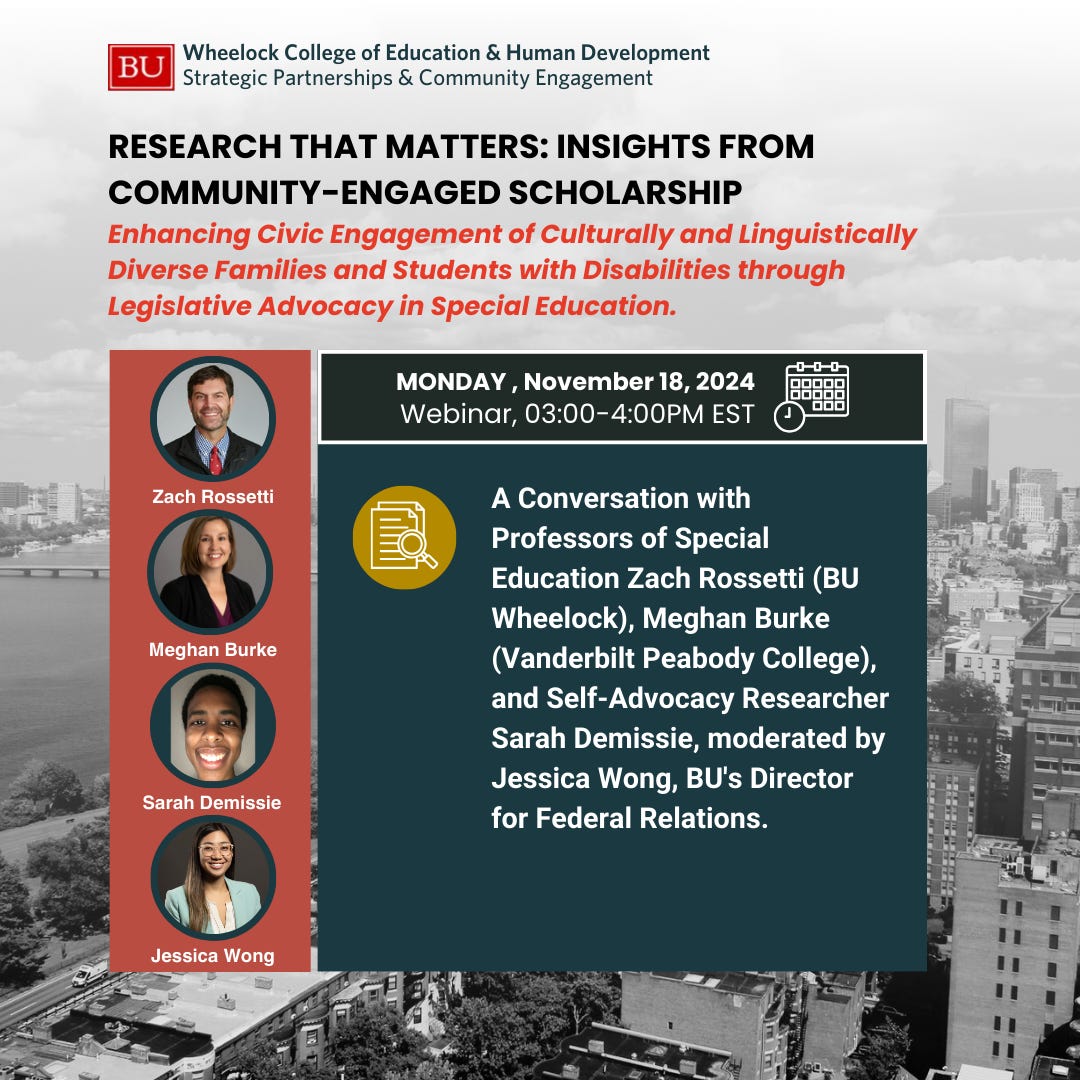
November 18 - Bolstering Family Participation in IDEA Reauthorization Through Civic Engagement Trainings. Join the SPACE Office on November 18th from 3:00-4:00 pm EST for the Research that Matters: Insight from Community-Engaged Scholarship webinar and hear Zach Rossetti (Assoc. Professor, BU Wheelock), Meghan Burke (Professor, Vanderbilt Peabody College), and Sarah Demissie (Self-Advocacy Researcher), discuss their recent research on enhancing civic engagement in culturally and linguistically diverse families and students with disabilities through legislative advocacy in special education. This event will be moderated by Jessica Wong (Director, BU Federal Relations). Register here.